
Consents Overview
Feature Overview
Having user consents in your app is mandatory under several laws, such as the GDPR in the EU and the DPA in the UK, especially for terms and conditions and data protection. TRIFFT goes beyond these basic requirements by offering additional consent options, such as push notifications, SMS notifications, and email notifications. In TRIFFT, consents can be categorized as either mandatory or voluntary. Additionally, the app provides flexibility by allowing users to give their consents either during the registration process or later through their profile settings.
Еxample of a granted consent in the Content Cockpit
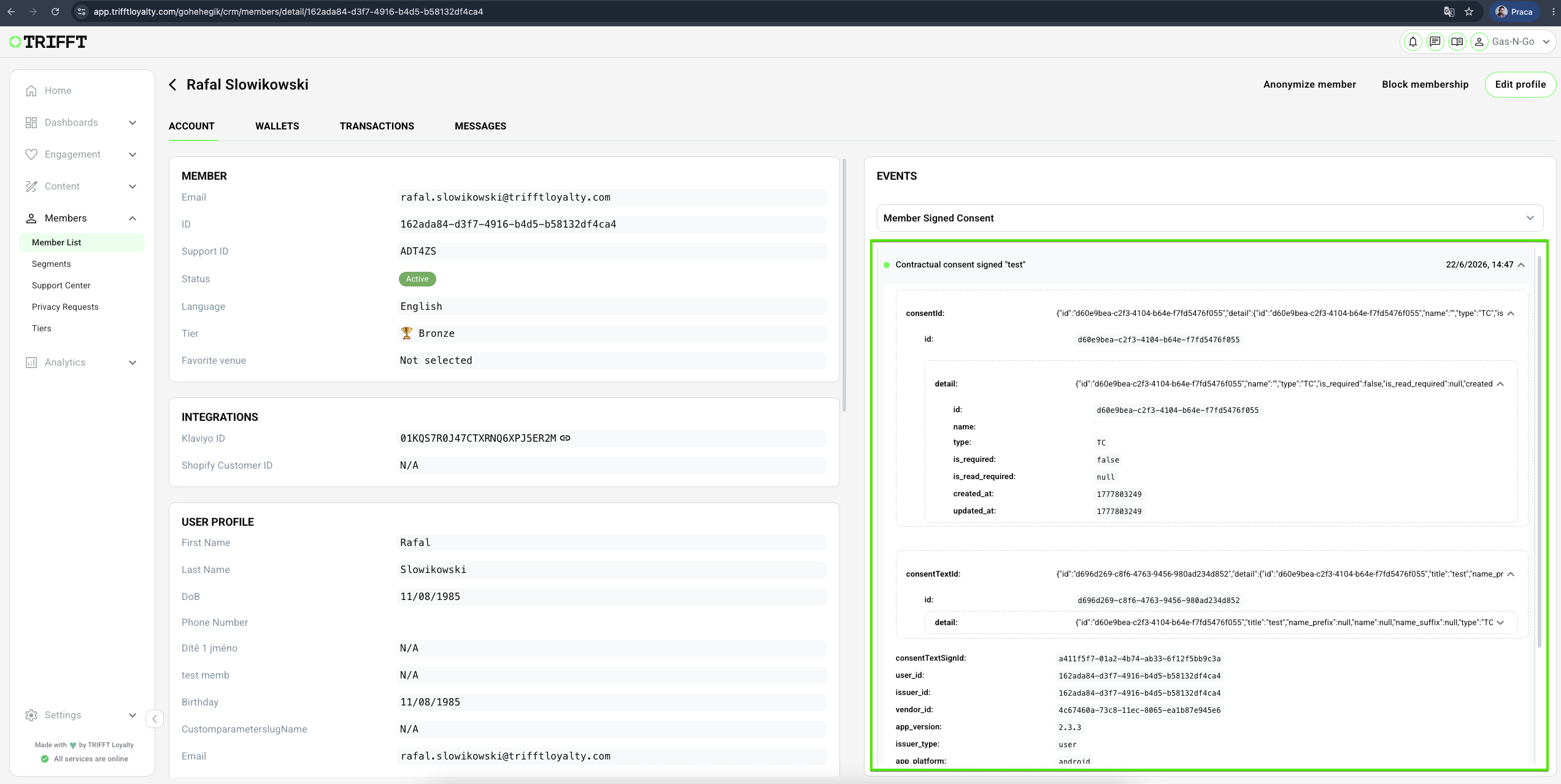
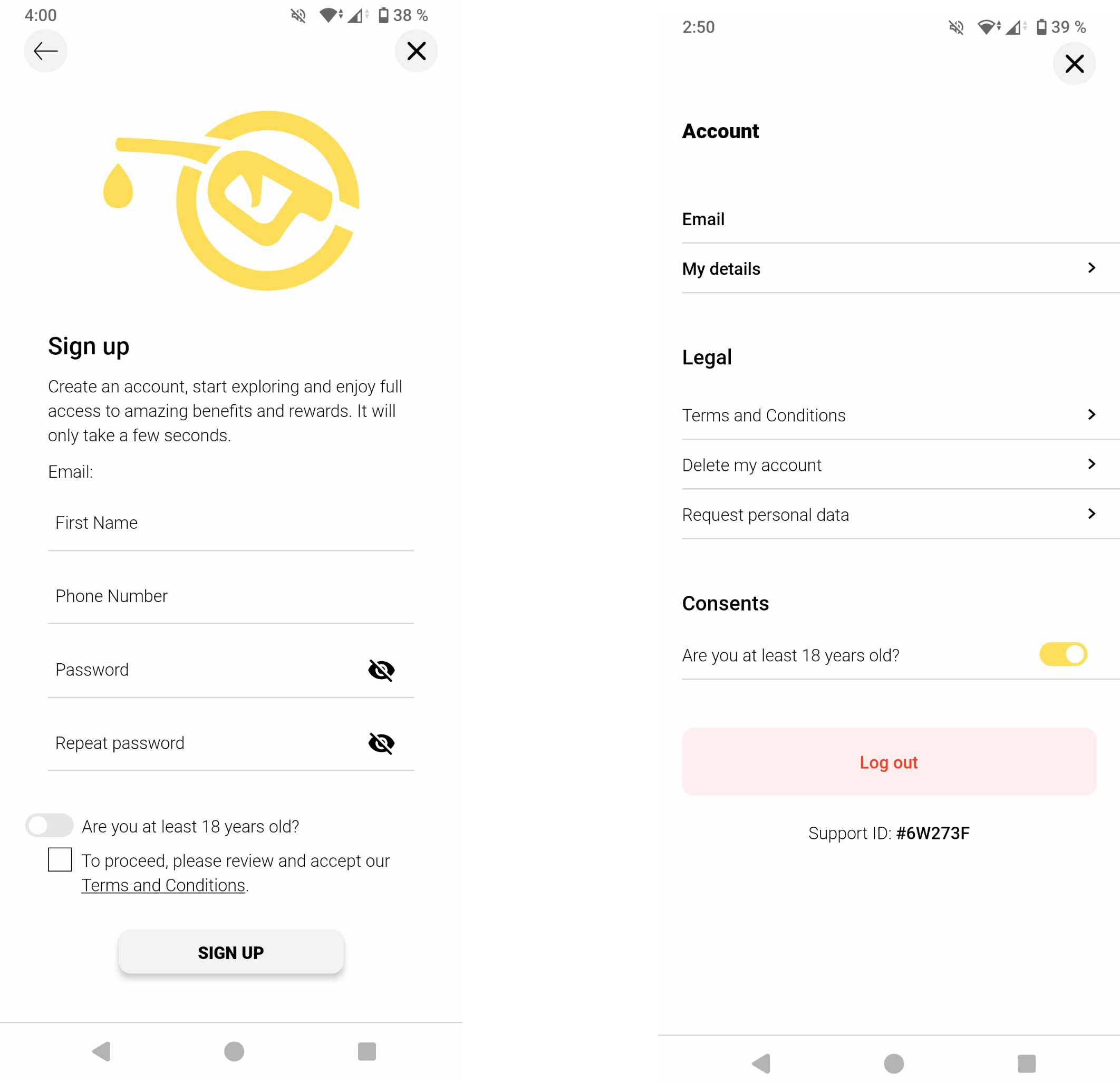
Еxample of consents in the mobile app
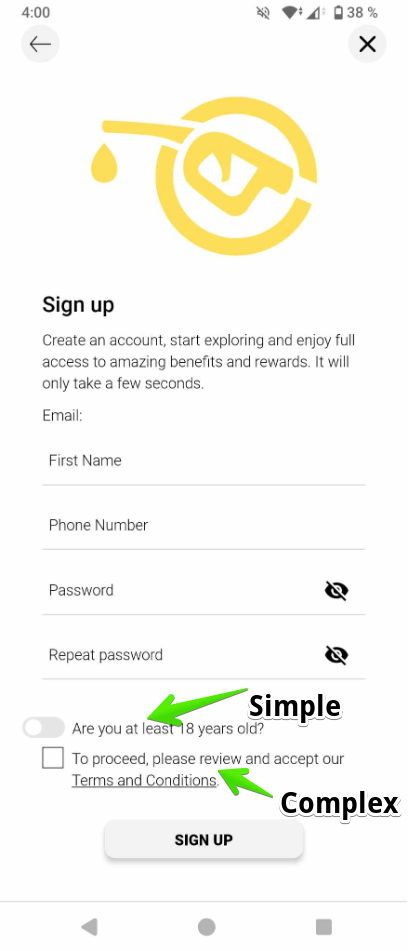
Simple and Complex Consent
TRIFFT offers users two different types of consent options.
Simple Consent is designed for straightforward consent collection, primarily used for cases where a long description is not required. Since it is not possible to provide additional details, this type of consent is ideal for situations like age verification.
Complex Consent is used when detailed information about specific consent is necessary. It is suitable for cases such as data protection agreements or terms and conditions, where longer and more comprehensive consents are required.
Why it matters
| Impact Area | Business Value |
|---|---|
| Revenue | Maximizes reachable audience by offering granular consent options (e.g., SMS only vs. Email), preventing "all-or-nothing" opt-outs that stop sales communications. |
| Efficiency | Automates the tracking of consent changes (who, when, and where) into an auditable trail, removing the need for manual privacy log management. |
| Customer Experience | Builds brand trust by providing members with a transparent, self-service page to manage their own subscription preferences at any time. |
Risk if ignored — Without proper consent management, brands face significant legal risks under GDPR/CCPA and may inadvertently send communications to opted-out users, leading to high spam reports and damaged sender reputation.
Example use cases
- Custom Consent Categories — Organize permissions into distinct groups like "Weekly Newsletters," "Flash Sale Alerts," or "Third-Party Partners".
- Automated Re-Consenting — Trigger a "Refresh your preferences" campaign for members whose consents are nearing a set expiration date.
- Legitimate Interest Processing — Configure specific data activities based on business necessity rather than explicit opt-in where legally applicable.
- Segment-Based Campaigns — Build "Engageable" segments that only include members who have actively granted consent for a specific channel like Push or SMS.
- In-App Preference Center — Embed a customizable management page directly within the Mobile App to allow users to toggle notifications without leaving the loyalty experience.
How to measure success
Key Performance Indicators
- Primary KPI: Consent Opt-In Rate (percentage of total members with at least one active marketing consent).
- Secondary KPIs: Consent Churn Rate (opt-out frequency) and Segment Reachability.
- Guardrails: Monitor "Revoked" events to identify campaigns that may be causing excessive opt-outs.
Governance & Operations
- Suggested review cadence: Monthly to ensure all new communication channels or data practices are covered by an active consent category.
Updated 2 days ago